


Discovering El Shadai
Vulnerability is the space where divine power dwells
Vulnerability is the space where divine power dwells
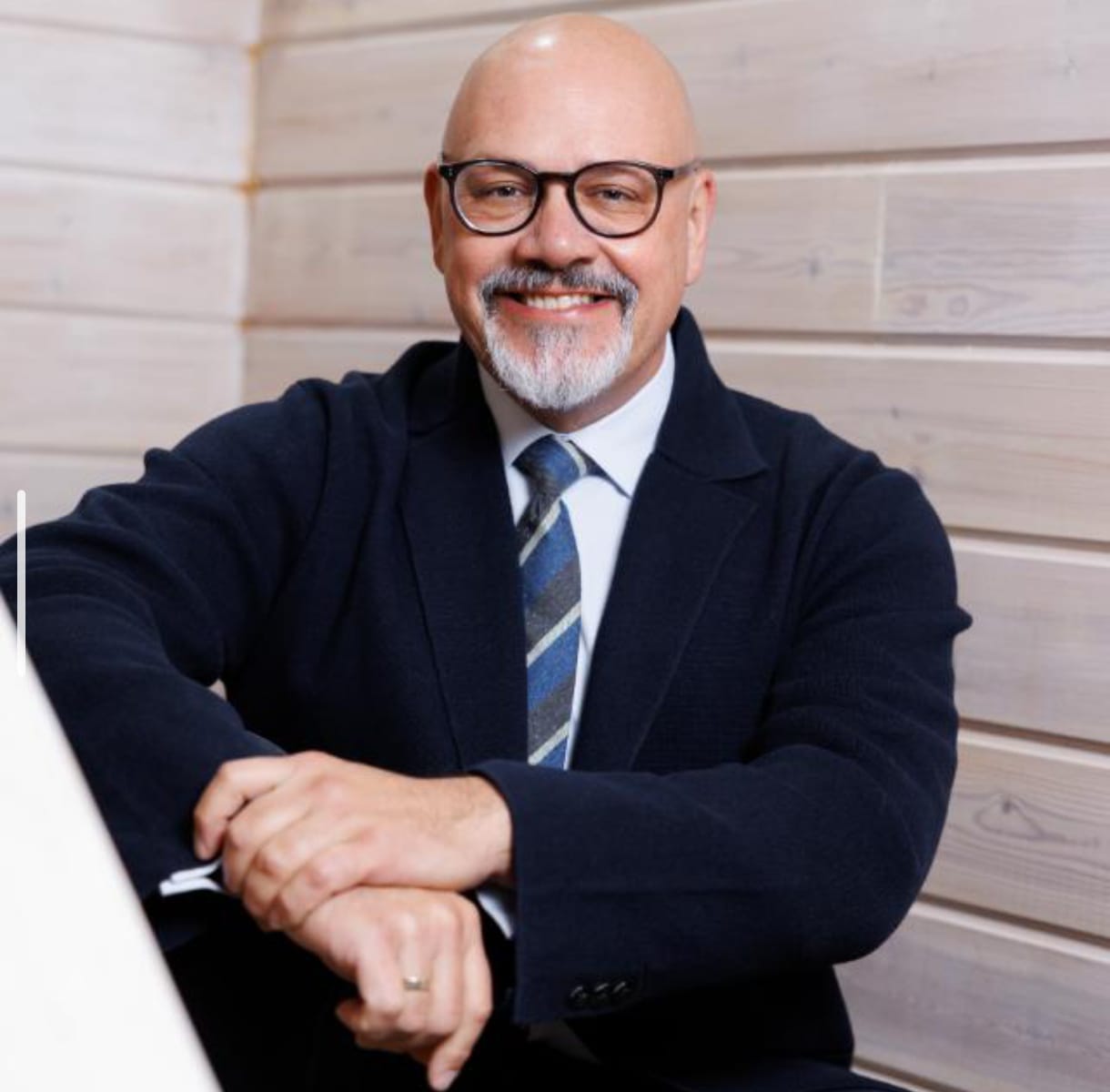
By Dr. Eli Lizorkin-Girzhel (read bio)
Reading time: 7 min. Impact: Eternity.
Chapter 17 represents a crucial juncture in the unfolding narrative of Genesis. It serves as the entrance to a covenant with YHVH and sets the stage for the joy that will accompany Isaac’s birth. But before this promise can be fulfilled, Abraham and his family must cross a threshold that is spiritual, symbolic, personal, and physical. The story in Genesis 17 features a significant insight almost always missed by us in our readings. But before we refer to it, a few introductory remarks are in order.
The Revelation of El Shadai
The chapter opens with a theophany that redefines the very nature of the God. The Holy One appears to Abram (Avram, אַבְרָם) and introduces Himself by a new name: El Shadai (אֵל שַׁדָּי). Our Bibles often translate this term as “God Almighty”—a title of raw, omnipotent power, drawing on the root shadad (שָׁדַד), meaning to overwhelm or destroy. But the Hebrew allows for a different translation. The same consonants point to shadayim (שָׁדַיִם), the Hebrew word for “breasts”—an ancient and powerful symbol of nurture and the capacity to sustain human life. In this light, God’s self-revelation as El Shadai becomes less about an overwhelming force (“God Almighty”) and more about being the “All-Sufficient One”—the God who nourishes and sustains, who makes good on His parental promise.
A New Identity
In Genesis 17, God speaks a new reality into existence. The name Abram, which means “exalted father” from av אָב (“father”) and ram רָם (“high”), becomes Abraham, which means “father of a multitude,” from av אָב (“father”) and hamon הָמוֹן (“many” or “a multitude”).
In a stunning declaration, God calls things that are not yet as though they already were. Abraham, still childless at ninety-nine, is redesignated as the progenitor of many nations. But more than that, the Holy One adds the Hebrew letter “hei” (ה) to Abram’s name—a signature letter from the Divine Name, YHVH (יהוה). The very Hebrew letter (ה) that symbolizes both God and the life He gives was now inserted into the name “Abram” (אַבְרָם) to transform it into “Abraham.” (אַבְרָהָם)
The Sign of Covenant
The LORD (YHVH) tells Abraham that the sign of the covenant between Him and Abraham and his offspring will be the sign of circumcision (brit milah, בְּרִית מִילָה). In doing so, God takes the very organ of human procreativity—the locus of man’s power to control his future, to build his dynasty, and to establish his name—and marks it as His own.
It is a sign inscribed in the flesh (ot bavasar, אוֹת בַּבָּשָׂר): a permanent mark, not merely recorded on paper or even carved in stone, but bearing a weight far greater than either. It stands as an enduring reminder—passed on from generation to generation—that the highest creative capacity of a man (making a child) must yield to the authority of the LORD.
What is important, however, is that the command extends beyond Abraham. YHVH instructs him:
“Every male among you shall be circumcised… he who is born in your house and he who is bought with money from any foreigner who is not your descendant.” (Genesis 17:10–12)
The covenant embraces not just the biological line but also the entire household—the whole community that dwells with Abraham. Every male, from heir to servant, must bear this mark. It is a profound leveling, demonstrating that belonging to God is not a matter of pedigree alone but of being incorporated into the household of faith.
In a Single Day
What happens slightly later is the ultimate proof of Abraham’s trust. That very same day, without hesitation or strategic delay, Abraham took Ishmael and every male born in his house and bought with his money and “circumcised the flesh of their foreskins” (Genesis 17:23).
When you finish reading this article, please make your contribution to help grow this ministry and reach more people. You can do so even now by clicking HERE and continue once you have done so. Dr. Eli will be very grateful!
His obedience was not only thorough but also immediate, seemingly without consideration for dangerous consequences.
Why would the timing matter? Because by circumcising every male in his household on a single day, Abraham rendered his entire encampment completely defenseless, trusting that the LORD (YHVH), now also known as El Shadai, would keep everyone safe. He remembers God’s promise given earlier. (Gen 15:1). There we read:
“Do not fear, Abram (אַל־תִּירָ֣א אַבְרָ֗ם), I am a shield to you (אָנֹכִי֙ מָגֵ֣ן לָ֔ךְ); Your reward shall be very great. (שְׂכָרְךָ֖ הַרְבֵּ֥ה)” (Gen 15:1)
It is clear that Abraham had to have recalled this promise when he considered the great danger to which his entire clan would now be exposed in the hostile environment of the ancient Middle East.
To understand this peril, we need only look ahead to the tragic story of Dinah in Genesis 34. There, after Shechem, a Hivite prince, violates Jacob’s daughter, he seeks to marry her. Her brothers, Simeon and Levi, respond with cunning deception. They insist that intermarriage can only occur if every male in Shechem’s city undergoes circumcision.
Hamor and Shechem persuade their townsmen to comply. But on the third day, when the men are “in pain” (Genesis 34:25)—at their most physically vulnerable and incapacitated—Simeon and Levi descend upon the city and slaughter every male.
So, coming back to our earlier story, Abraham, the seasoned and wise warrior, was surely aware of the realities on the ground. He had recently led his 318 trained men to rescue his nephew Lot and his family from being kidnapped, demonstrating his strategic capability (Genesis 14). He was well aware that a fighting force of incapacitated men would be no help at all.
By ordering a mass circumcision on a single day, Abraham was not just performing a ritual; he was fulfilling God’s command at the high cost of personal and communal security. He knew that for up to two weeks, every fighting man would be incapacitated, leaving the camp’s flocks, wealth, and families utterly defenseless against any vengeful neighbor or passing nomad. In that moment of profound vulnerability, he was placing his entire future—his wealth, his family, and his very life—into the hands of El Shadai, the All-Sufficient One.
From Abraham to Christ
This powerful moment of Abraham’s complete vulnerability finds its ultimate fulfillment in the ministry and death of Jesus. Just as Abraham rendered his entire household defenseless, trusting in El Shadai’s protection, Jesus would later strip Himself of divine privilege and power, making Himself utterly vulnerable on a Roman cross. The parallel deepens when we consider the words Jesus spoke from that cross: “Father, into Your hands I commit My spirit” (Luke 23:46). These are not merely words of resignation but of profound trust—the same trust Abraham demonstrated when he placed his entire camp’s safety into God’s hands. Where Abraham surrendered his capacity to protect his household through military might, Jesus surrendered His very life, trusting the Father to both receive His sacrifice for the world and to resurrect Him in three days. In other words, just as Abraham’s obedience on that single day opened the door for the creation of Israel as a family, Jesus’s complete self-surrender on the cross opened the door for the entire new creation (Rev 21:5).
Conclusion
This represents the forefront of our faith in the modern era. We are all, in some way, tempted to build our own security—whether through strategic planning, financial safety nets, or personal ability. But God still calls us to a place of sacred vulnerability, where we lay down our self-sufficiency and trust Him with the things we cannot control. It is in that space of our surrendered power that His power becomes manifest.
We are not called to strategize our way to safety but to trust the All-Sufficient One enough to make ourselves vulnerable to His promise and power. This is the path Abraham walked, the path Jesus perfected, and the path you and I must take.
Partner with Dr. Eli today! Whether you choose a one-time gift or a monthly partnership (moderate or large), every contribution (and this is absolutely true!) will impact the lives we will serve together. Click HERE or below.
Comments (43)
This is so enlightening! You give me much to ponder. Thank you so much!
Glad to hear. Let us grow!
Thank you so much for the insight into this name and the meaning behind the circumcision. Very very interesting !
Glad to hear! Enjoy!
Thank you, had not heard the explanation like this previously
Enjoy!
This is a wonderful composition, Dr. Eli! I particularly liked your Hebrew word analysis and the bits about Abraham not delaying execution of God's instructions, despite the arguably compromising situation it presented when viewed through a pragmatic lens. I was hit rather hard today by how many people are swiftly turning to the new machine hailed as "AI", which is completely devoid of the true intelligent and curious nature of God's creation. Your articles are a testament to the Lord's handiwork and the unique gifts He has bestowed upon us! Nothing else can replicate Him or the divine inspiration He gives to those who earnestly seek Him! God bless!
Dear Adam, Thank you both for thoughtful comments and for all you do behind the scenes to make this ministry a profound success!
Dr Eli, this is a great teaching. Shaddai can be "My Breast" can it not? Meaning My Provider, for Eloheinu provides not only everything we need, because even concrete and steel come from our mother, the Earth. Adama. So, the Almighty Provider, and your way of saying the All-Sufficient One also fits excellently.. but that whole paragraph is a teaching that all believers should know, because in many Hebrew words, there are different meanings for the same word.
Avraham fulfilled his name, given by the All Sufficient One; was obedient, and prospered, and he was mighty in faith, and obedience, and his seed has been good to all the earth; Amen.
Bless you, my brother, and may you prosper. You're a great teacher, and I love how you teach through the languages.
I am very grateful, Danny.
I am so grateful to those of you who have decided to help me grow this ministry! May God bless you and keep you! If you are interested in making a contribution of any size, whether one- time or ongoing, please click here.
Thank you so much for your in depth teachings. Every time I get one I email it to my Bible teacher at my church.
My Bible teacher asked me to ask you if you would give your analogy on Judges 19. I have read many commentaries on this chapter but your knowledge is so profound I just wish you would do Judges 19 please?
Sharon, thank you. I may tackle it one day. Thanks for the idea. I am looking for these kinds of ideas especially Old Testament difficult passages.
Dear Dr. Eli,
Thank you always for your guidance. As I continue studying the Scriptures, I have often wondered about the meaning of circumcision beyond the promises of distinguishing the people from other nations and ensuring the prosperity of their descendants. In particular, I have been pondering what it truly means for us Gentiles to receive “circumcision of the heart.”
Today, I am deeply grateful to have received your teaching on this matter. I will be sure to share it with my brothers and sisters in the LORD. Thank you very much indeed.
Dear Yoriko,
I am deeply grateful for your support and encouragement. This is such a joy to know that my humble teaching is also reaching the nation of Japan. May the Lord continue to give us His light. I do have another article on circumcision; perhaps it too will be helpful - https://jewishstudiesforchristians.com/rethinking-circumcision/
That is why Yeshua needs to be placed within the context of covenant and re-rooted back to Torah. Thank you Tabbi Eli. Bless you and Bless Elshaddai.
Dr Eli do you think it's possible: back from Greek universalization of Jesus (and spiritualization of Israel as a distant place) to re-rooting Jesus to Jerusalem and the Torah - the context he had emerged?
I do believe so, and this ministry is certainly part of this important effort!
My dear brother Joseph, thank you for your support and encouragement! May the Lord richly bless you!
I am so sorry thar I won't be able to read your wonderfully lessons. I am 97 yrs old and now having multiple health problems. No energy, sight or time to read them. Keep up the good work. May the Lord bless you always.
Connie, May the Lord be with you as you continue to walk with him faithfully! You are true example of faith to all of us!
Thank you very much Rabbi! May God bless you!
Blessings and much peace!
I am so grateful to those of you who have decided to help me grow this ministry! May God bless you and keep you! If you are interested in making a contribution of any size, whether one- time or ongoing, please click here.